
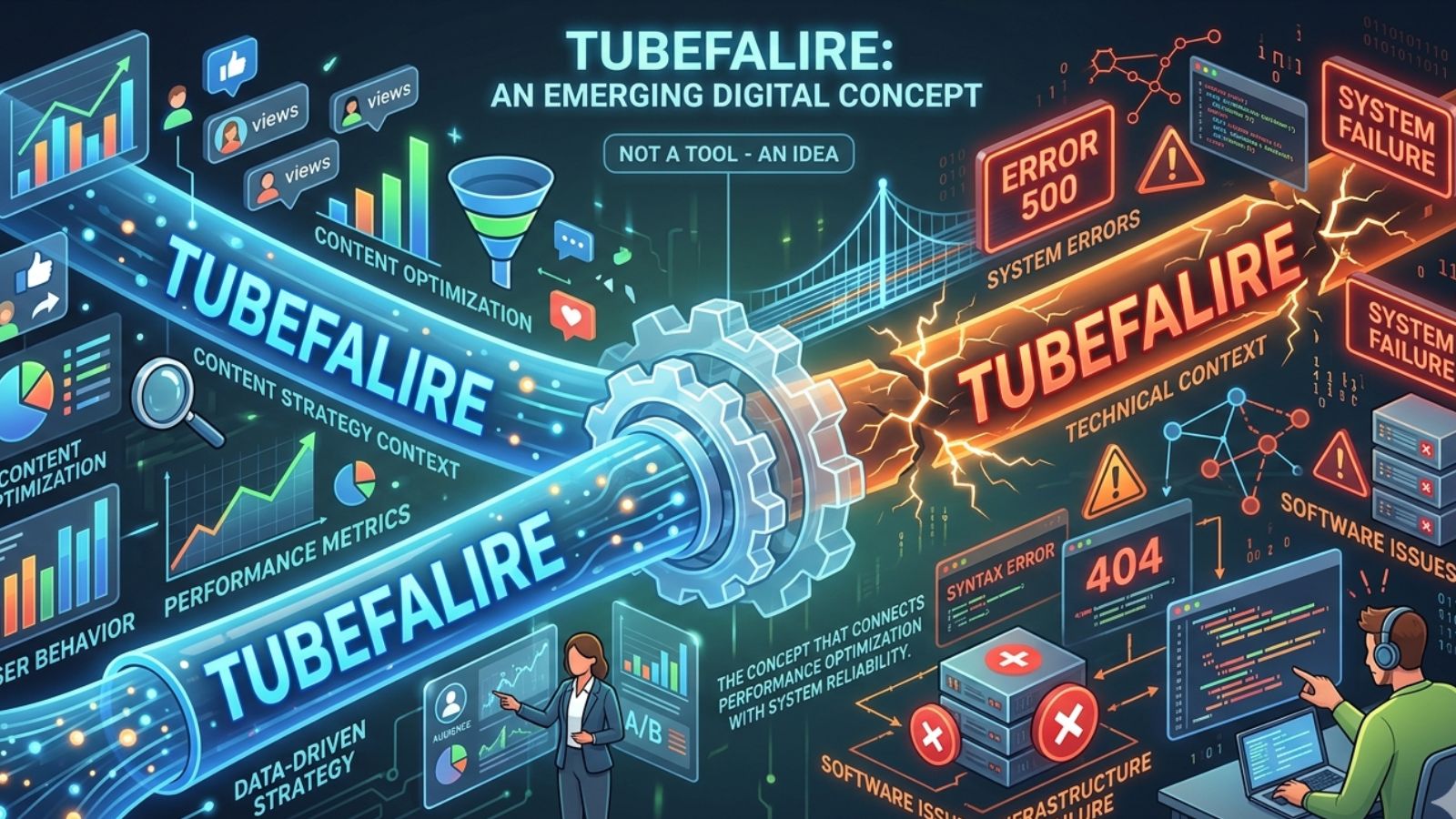

Tubefalire – In the fast-moving world of digital marketing and technology, new terms often emerge that challenge traditional definitions. One such term gaining attention is tubefalire. While it may sound like a product or software, tubefalire is not tied to any official platform or tool. Instead, it represents a conceptual framework used across two key areas: content strategy and technical systems.
At its core, tubefalire reflects how modern digital ecosystems operate—where data, content, and system performance are deeply interconnected. Understanding this term can give marketers, developers, and business owners a clearer perspective on optimizing online performance and diagnosing technical issues.
What Is Tubefalire?
Tubefalire is an emerging digital concept with dual meaning:
1. Content Strategy Context
In marketing, tubefalire refers to a data-driven approach used to improve content performance. It involves analyzing metrics, user behavior, and engagement patterns to refine strategies.
2. Technical Context
In development and IT discussions, tubefalire is used informally to describe system errors, inefficiencies, or unexpected failures within software or digital infrastructure.
In simple terms, tubefalire is not a tool—it is an idea that connects performance optimization with system reliability.
The Evolution of Digital Terminology
To understand tubefalire, it’s important to look at how digital language evolves. In earlier years, most terms were clearly defined and tied to specific tools or platforms. Today, however, many terms are:
- Abstract
- Context-dependent
- Concept-driven
This shift reflects the complexity of modern digital environments. Tubefalire fits into this new category of terminology—where meaning is shaped by usage rather than strict definitions.
Tubefalire in Data-Driven Content Strategy
One of the most valuable interpretations of tubefalire is in the field of content strategy. Here, it represents a method of improving performance through data.
Key Elements of Tubefalire in Content
1. Data Analysis
Content decisions are based on metrics such as:
- Traffic
- Engagement rates
- Bounce rates
- Conversion rates
Instead of guessing what works, marketers rely on data insights.
2. Performance Optimization
Tubefalire encourages continuous improvement by:
- Updating underperforming content
- Testing different headlines or formats
- Refining keywords and SEO strategies
3. Audience Understanding
By analyzing user behavior, brands can:
- Identify audience preferences
- Personalize content experiences
- Improve retention
4. Iterative Strategy
Tubefalire is not a one-time process. It involves constant testing, learning, and adjusting.
Tubefalire in Technical Systems
On the technical side, tubefalire takes on a different but equally important meaning. It is often used to describe system-level issues.
Common Scenarios
- Software bugs
- Server downtime
- API failures
- Performance bottlenecks
In this context, tubefalire highlights the importance of identifying and resolving issues quickly.
Why It Matters
Modern digital platforms depend on seamless system performance. Even minor issues can lead to:
- Loss of user trust
- Decreased engagement
- Revenue impact
Tubefalire, as a concept, emphasizes the need for proactive system monitoring and maintenance.
The Connection Between Data, Content, and Systems
What makes tubefalire unique is its ability to connect three critical components:
1. Data
Provides insights into performance and user behavior.
2. Content
Acts as the primary interface between users and digital platforms.
3. Systems
Ensure that content is delivered efficiently and reliably.
If any one of these elements fails, overall performance suffers.
For example:
- Great content without data insights may not reach the right audience.
- Strong data analysis without system stability leads to poor user experience.
- Reliable systems without quality content fail to engage users.
Tubefalire represents the intersection where all three must work together.
Practical Applications of Tubefalire
Understanding tubefalire can help businesses improve both marketing and technical performance.
For Marketers
- Use analytics tools to guide content decisions
- Focus on measurable outcomes rather than assumptions
- Continuously refine content strategies
For Developers
- Monitor system performance regularly
- Identify and fix errors quickly
- Optimize infrastructure for scalability
For Businesses
- Align marketing and technical teams
- Invest in both content quality and system reliability
- Use data to drive decision-making
Benefits of Applying the Tubefalire Concept
1. Improved Efficiency
By integrating data, content, and systems, businesses can operate more effectively.
2. Better User Experience
Users benefit from faster, more relevant, and reliable digital interactions.
3. Higher ROI
Data-driven strategies and stable systems lead to better conversion rates and revenue growth.
4. Stronger Digital Presence
Consistent performance builds trust and brand credibility.
Challenges Associated with Tubefalire
Despite its advantages, applying the tubefalire concept is not without challenges.
1. Complexity
Managing data, content, and systems together requires expertise.
2. Resource Requirements
It may require investment in tools, technology, and skilled professionals.
3. Continuous Effort
Tubefalire is not a one-time solution. It requires ongoing monitoring and optimization.
4. Communication Gaps
Marketing and technical teams often work separately, making integration difficult.
Why Tubefalire Is Trending in 2026
Several factors are driving the popularity of tubefalire:
Data Explosion
Businesses now have access to more data than ever before, making data-driven strategies essential.
Content Saturation
With millions of pieces of content published daily, optimization is critical.
System Complexity
Modern platforms rely on complex architectures that require constant maintenance.
Integrated Digital Ecosystems
Success depends on how well different components work together.
Tubefalire captures all these trends in a single concept.
Future Outlook of Tubefalire
As digital environments continue to evolve, the principles behind tubefalire are likely to become more important.
Expected Developments
- Greater use of AI in data analysis
- More personalized content experiences
- Advanced system monitoring tools
- Increased collaboration between teams
Tubefalire may not become a formal industry term, but the idea it represents will remain highly relevant.
Conclusion
Tubefalire is a modern digital concept that bridges the gap between data, content, and systems. It highlights the importance of integrating these elements to achieve optimal performance in both marketing and technology.
Rather than being a specific tool or platform, tubefalire serves as a framework for understanding how digital success works in today’s environment. By applying its principles, businesses can improve efficiency, enhance user experience, and stay competitive in an increasingly complex digital landscape.
FAQs About Tubefalire
1. What does tubefalire mean?
Tubefalire is a conceptual term used to describe both data-driven content strategies and technical system issues in digital environments.
2. Is tubefalire a software or tool?
No, it is not a product or platform. It is an idea used in discussions about marketing and technology.
3. How is tubefalire used in content strategy?
It refers to using data and analytics to improve content performance and audience engagement.
4. What does tubefalire mean in technical terms?
In technical contexts, it describes system errors, inefficiencies, or performance issues.
5. Why is tubefalire important?
It highlights the connection between data, content, and systems, helping businesses optimize their digital performance.
