

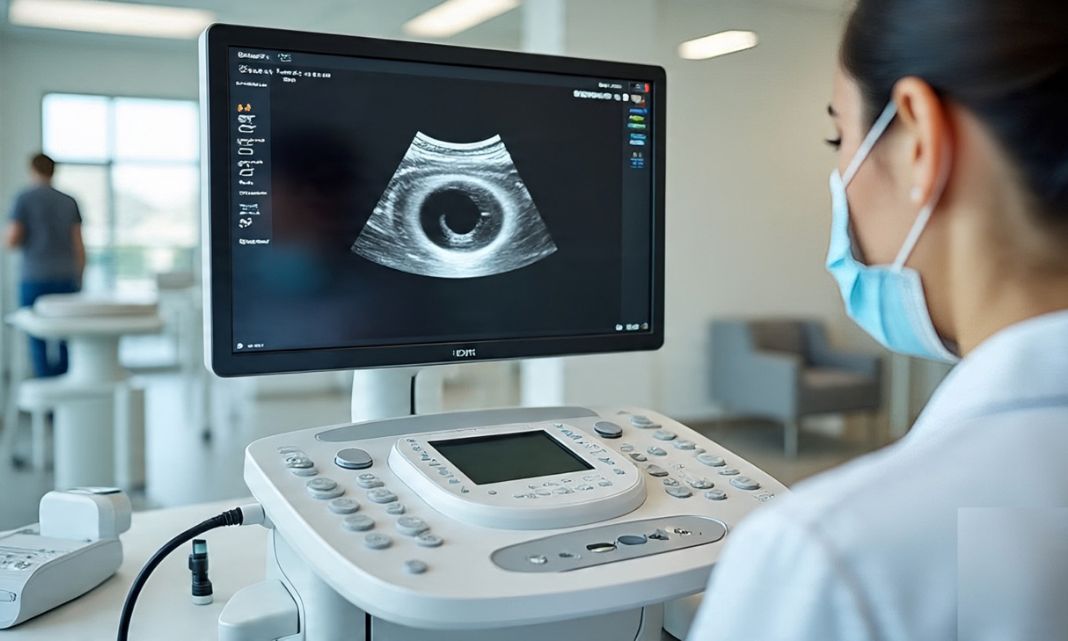
In busy eye clinics, time and accuracy are everything. Traditional ultrasound machines are bulky, expensive, and not always reliable. Enter DGH A (DGH 6000 A-Scan, also known as Scanmate A)—a portable, USB-powered ocular ultrasound that delivers precise measurements in seconds.
This handheld device measures axial length, anterior chamber depth, and lens thickness with accuracy rivaling larger cart-based machines, but in a far more compact form. For ophthalmologists, optometrists, and surgical teams, DGH A is more than a convenience—it’s a game-changer.
What Makes DGH A Different?
Unlike older, stationary systems, DGH A is truly portable. Plug it into a laptop or tablet, launch the software, and start scanning in contact or immersion mode. The device even provides real-time auditory guidance, helping both experts and beginners achieve proper alignment.
- Speed: Delivers results in under a minute
- Accuracy: Clinical trials show a mean absolute error of <0.12 mm
- Integration: Syncs directly with EMR/EHR systems, eliminating manual entry
- Flexibility: Works in clinics, operating rooms, or mobile outreach settings
Precision Without Compromise
A common concern with portable medical devices is accuracy. DGH A overcomes this with features such as:
- 30 measurements per second in contact mode
- Immersion mode with Prager Shell® for clearer echoes
- Firmware updates that enhance speed and performance
- Five built-in IOL formulas (SRK/T, Hoffer Q, Holladay I, Haigis, Binkhorst II)
This ensures surgeons and technicians can rely on DGH A for pre-operative cataract assessments and other ophthalmic procedures.
Real-World Results
Clinics using DGH A report significant improvements:
- 25% reduction in pre-operative exam times
- Fewer patient no-shows, since appointments are faster and less stressful
- Seamless EMR integration, cutting manual errors to near zero
- High satisfaction scores from both technicians and patients
Case studies from U.S. eye centers confirm that return on investment often occurs in less than two years, thanks to productivity gains and reduced downtime.
Portability and Workflow Benefits
DGH A is designed for mobility. At just 5.75″ × 3.5″, it fits into a small carrying case and can be transported between clinics, operating rooms, or even community outreach events.
With automatic reporting, ophthalmologists save hours of administrative work. Data can be exported as CSV or PDF, integrated directly into cataract planning software, and shared securely across networks.
Cost and Maintenance
- MSRP: Around $4,500
- Annual service: $1,200 (OEM) or ~$650 with third-party calibration
- Firmware updates: Free, ensuring long-term device reliability
Compared to bulky machines with higher service costs, DGH A keeps total ownership costs low while maximizing clinical efficiency.
The Future of DGH A (2024–2025)
The roadmap for DGH A includes:
- AI-driven measurement tools (auto-reticle placement)
- 5G-enabled tele-ultrasound for rural or remote clinics
- Flexible subscription models starting at $99/month
These updates position DGH A as not just a current solution but a future-ready investment in ophthalmology.
5 Key FAQs on DGH A
Q1: What is DGH A?
It’s a portable, USB-powered A-Scan device for ophthalmology, measuring axial length, anterior chamber depth, and lens thickness with high precision.
Q2: How accurate is DGH A compared to traditional A-Scans?
Clinical trials show <0.12 mm mean absolute error, equal to larger machines but with faster workflows.
Q3: Can DGH A integrate with electronic medical records?
Yes. It connects via a proprietary API, auto-uploads patient data, and generates ready-to-print reports.
Q4: How portable is the device in daily use?
At under 6 inches and USB-powered, it works in multiple settings—clinics, surgical centers, or mobile outreach programs.
Q5: What’s the long-term cost of owning a DGH A?
With a base price of ~$4,500 and annual service between $650–$1,200, most clinics recoup costs within 18–24 months due to improved efficiency.
Conclusion
DGH A isn’t just a smaller ultrasound—it’s a smarter one. Its portability, precision, and seamless integration make it a must-have for modern ophthalmology practices. With upcoming AI features and cost-effective service options, DGH A is setting a new standard for A-Scan technology.

