
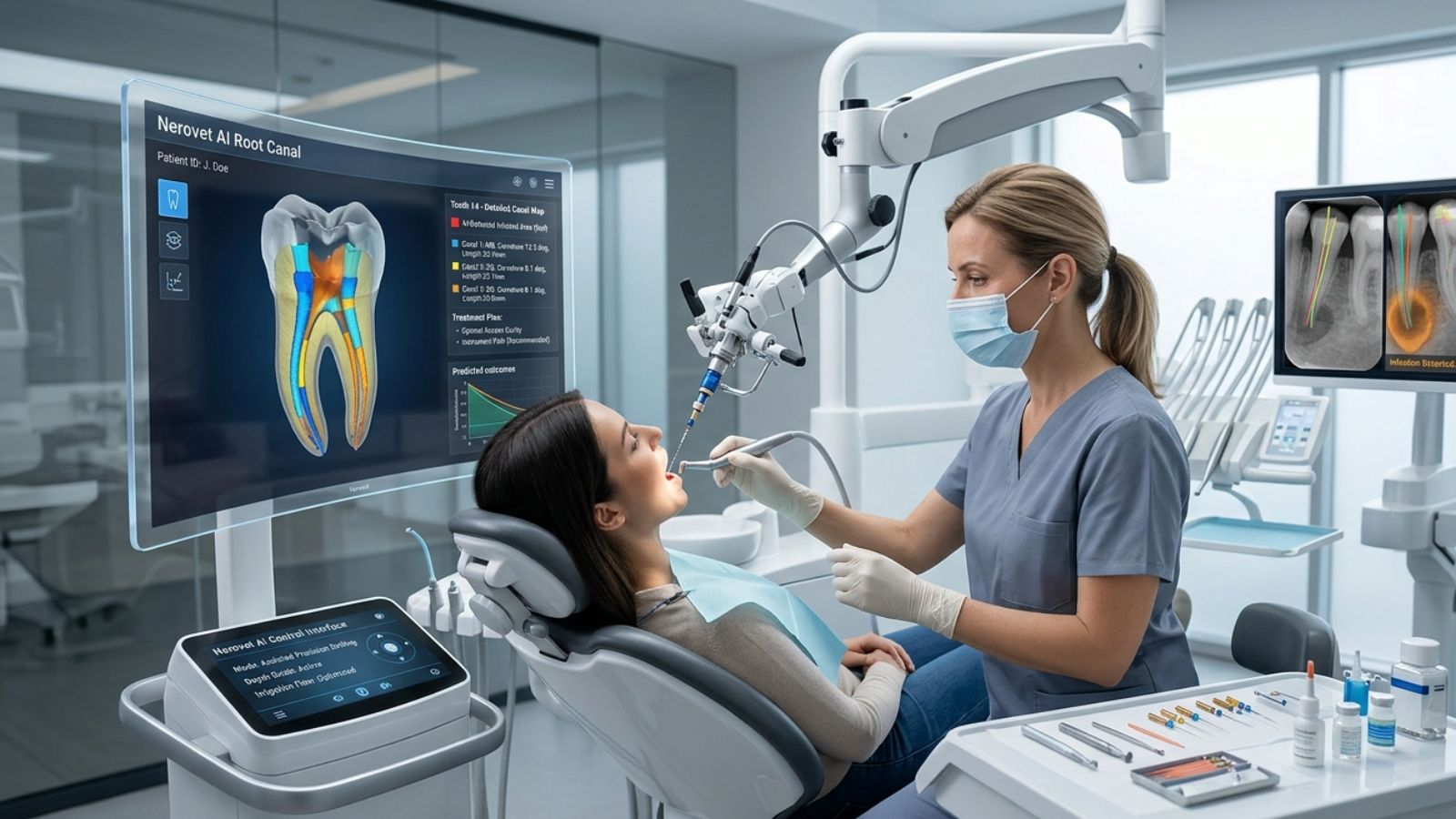

Dental treatments have evolved significantly over the last few decades, especially with the integration of digital imaging, robotics, and artificial intelligence (AI). One of the emerging concepts being discussed in modern dentistry is AI-assisted root canal treatment, often referred to in online discussions as “Nerovet AI Root Canal.”
While the term “Nerovet AI” is not a widely recognized official dental system in mainstream clinical literature, it is commonly used in digital conversations to describe AI-powered or AI-assisted endodontic (root canal) procedures. These systems represent the broader trend of using artificial intelligence to improve diagnosis, precision, and treatment outcomes in dentistry.
This article breaks down the benefits, risks, and real truth behind AI-assisted root canal treatments, helping patients understand what is real, what is developing, and what is still evolving in modern dental care.
What Is an AI Root Canal (Nerovet AI Concept)?
A root canal is a dental procedure used to treat infection or damage inside a tooth. Traditionally, dentists perform this manually using tools, X-rays, and clinical experience.
An AI-assisted root canal system refers to the use of artificial intelligence technologies to support or enhance this process. This may include:
- AI-based dental imaging analysis
- Automated detection of infected root canals
- 3D mapping of tooth structure
- Robotic or precision-guided instruments
- Predictive treatment planning
The idea behind “Nerovet AI Root Canal” represents a modern, tech-enhanced approach where AI supports dentists in making more accurate decisions.
How AI Is Used in Root Canal Treatment
AI does not replace dentists but works as an advanced assistant in several key areas:
1. Diagnosis Support
AI systems can analyze dental X-rays or 3D scans to identify:
- Hidden infections
- Cracked tooth structures
- Root canal complexity
- Early signs of decay
This helps dentists detect problems earlier and more accurately.
2. Treatment Planning
AI can generate a detailed map of the tooth structure, helping dentists:
- Plan the procedure step-by-step
- Identify hard-to-reach canals
- Reduce treatment errors
3. Precision Guidance
In advanced setups, AI may assist in guiding instruments to:
- Clean infected canals more effectively
- Avoid damage to healthy tissue
- Improve overall accuracy
4. Outcome Prediction
AI systems can estimate:
- Success rates of treatment
- Risk of reinfection
- Recovery time expectations
Benefits of Nerovet AI Root Canal (AI-Assisted Dentistry)
AI integration in root canal treatment offers several potential advantages.
1. Higher Accuracy
AI improves diagnostic precision by analyzing detailed imaging data. This reduces the chance of:
- Missing infected canals
- Incorrect diagnosis
- Incomplete cleaning
Better accuracy often leads to better long-term results.
2. Faster Diagnosis
Traditional analysis of dental scans can take time. AI can process images quickly, allowing:
- Faster treatment decisions
- Reduced waiting time for patients
- More efficient clinic workflows
3. Improved Treatment Planning
AI systems help dentists understand the exact structure of a tooth, including complex root patterns. This leads to:
- More effective treatment strategies
- Fewer complications during procedures
4. Less Human Error
Even experienced dentists can face challenges in complex cases. AI reduces risks by:
- Highlighting hidden problem areas
- Supporting decision-making
- Providing data-driven insights
5. Better Patient Experience
With improved planning and precision, patients may experience:
- Shorter procedures
- Reduced discomfort
- Faster recovery times
Risks and Limitations of AI Root Canal Systems
Despite its benefits, AI-assisted dentistry also comes with limitations.
1. Not Fully Independent
AI is not a replacement for dentists. It is only a support tool. Human expertise is still essential for:
- Final decision-making
- Physical treatment execution
- Handling complications
2. Technology Dependency
Over-reliance on AI systems may lead to:
- Reduced clinical judgment in some cases
- Errors if AI data is incorrect or incomplete
3. High Cost of Equipment
Advanced AI dental systems require expensive:
- Software
- Imaging tools
- Training programs
This may increase treatment costs in some clinics.
4. Data Accuracy Concerns
AI systems depend on data quality. Poor imaging or incomplete records can affect:
- Diagnosis accuracy
- Treatment recommendations
5. Limited Availability
Not all dental clinics currently use AI-assisted systems. It is still:
- Emerging technology
- Limited to advanced dental centers
- Under continuous development
Real Truth About Nerovet AI Root Canal
The “real truth” behind terms like Nerovet AI Root Canal is that they represent a concept or trend rather than a single standardized medical product.
Here is what is actually true:
- AI is increasingly used in dentistry
- Root canal procedures can benefit from AI-assisted imaging and planning
- No AI system replaces the dentist’s physical role
- The term is often used broadly in online discussions
In simple terms, it is not a magical automated treatment, but rather an advanced support system improving traditional dental care.
Future of AI in Root Canal Treatments
The future of dentistry is moving toward a hybrid model where:
- Dentists remain central decision-makers
- AI provides real-time support
- Robotics may assist in precision tasks
We may see developments such as:
- Fully digital tooth mapping systems
- Real-time AI-guided procedures
- Predictive dental health monitoring
- Minimally invasive root canal techniques
However, widespread adoption will take time as safety, accuracy, and regulation standards continue to evolve.
Should Patients Be Concerned?
For most patients, AI-assisted dentistry is a positive development. It aims to:
- Improve accuracy
- Reduce pain and complications
- Enhance treatment outcomes
However, patients should always ensure:
- Treatment is performed by qualified dentists
- Clinics use certified and approved technology
- Proper diagnosis is done before procedures
Final Thoughts
The concept of Nerovet AI Root Canal represents the growing integration of artificial intelligence in modern dentistry. While not a single standardized system, it reflects real technological advancements that are improving how root canal treatments are diagnosed and performed.
AI does not replace dentists—it empowers them. The combination of human expertise and machine intelligence is shaping the future of dental care, making procedures more precise, efficient, and patient-friendly.
As technology continues to evolve, AI-assisted root canal treatments are likely to become more common, but professional dental judgment will always remain the most important factor in successful outcomes.
FAQs
1. What is Nerovet AI Root Canal?
Nerovet AI Root Canal refers to the concept of AI-assisted root canal treatment where artificial intelligence supports diagnosis, planning, and precision in dental procedures.
2. Is AI used in real root canal treatments?
Yes, AI is increasingly used in modern dentistry for imaging analysis, diagnosis support, and treatment planning, but it does not replace the dentist.
3. Is AI root canal better than traditional methods?
AI can improve accuracy and planning, but traditional dental expertise is still essential. The best results come from combining both.
4. Is Nerovet AI Root Canal safe?
Yes, AI-assisted dentistry is generally safe when used by qualified professionals and approved medical systems.
5. Will AI replace dentists in root canal treatment?
No, AI will not replace dentists. It is designed to assist them, not perform procedures independently.
